Like many small towns, Telluride claims an impressive-sounding ‘historical first.’ Our particular claim is that Telluride became the site of the world’s first long distance transmission of alternating current for commercial purposes in 1891. The other claim that gets bandied about is that Telluride was the first town in the world to have electric street lights. This record contrasts with the first in its utter lack of qualifiers. Unlike ‘first long distance transmission of alternating current for commercial purposes,’ which looks unwieldy and underwhelming on a signpost, ‘first electric street lights in the world’ is succinct and impressive. It is also almost certainly untrue. The city of Wabash, Indiana claims to be: “the first town in the world to be generally lighted by electricity” as of March 8, 1880 (Tocco 350), more than a decade before Telluride makes its own dubious claim. But there is a basic problem with historical firsts of this nature. What exactly does “generally lighted” mean as opposed to just “lighted?” If a private party had paid for the streetlights instead of the town would it still count? Was every street lit? Every alley? With historical records like these, there is no governing body unless Guinness deigns to intervene. Wabash is not the first town in the world to have electric street lights, though it may have been the first town to be “generally lighted by electricity.” It seems like Paris, true to its nickname, may have that honor, but once again, this is very difficult to substantiate because there are so many different concurrent experiments, exhibitions, and installations, that it is probably misleading to think about a single origin of electric lighting in the first place. ‘First long distance transmission of alternating current for commercial purposes,’ on the other hand, does have some historical value that belies the string of qualifications.
For about a hundred years, electromagnetism was a promising novelty, the object of tinkering by renaissance men, backyard inventors, and soon-to-be-disappointed entrepreneurs. Ben Franklin conducted his famous kite experiment in 1752. Fifty years later, Sir Humphry Davy was able to create an ephemeral and impractical incandescent lamp with a platinum filament. He also created an arc lamp using two pieces of charcoal for carbon contacts (Slingo et al. 649). The real bottleneck, as it turns out, was not the means of generating light via electricity, but the means of generating electricity in the first place. More than a hundred years after Ben Franklin's discovery, the dynamo was invented, and electricity went from a promising curiosity to the technology that transformed the world.

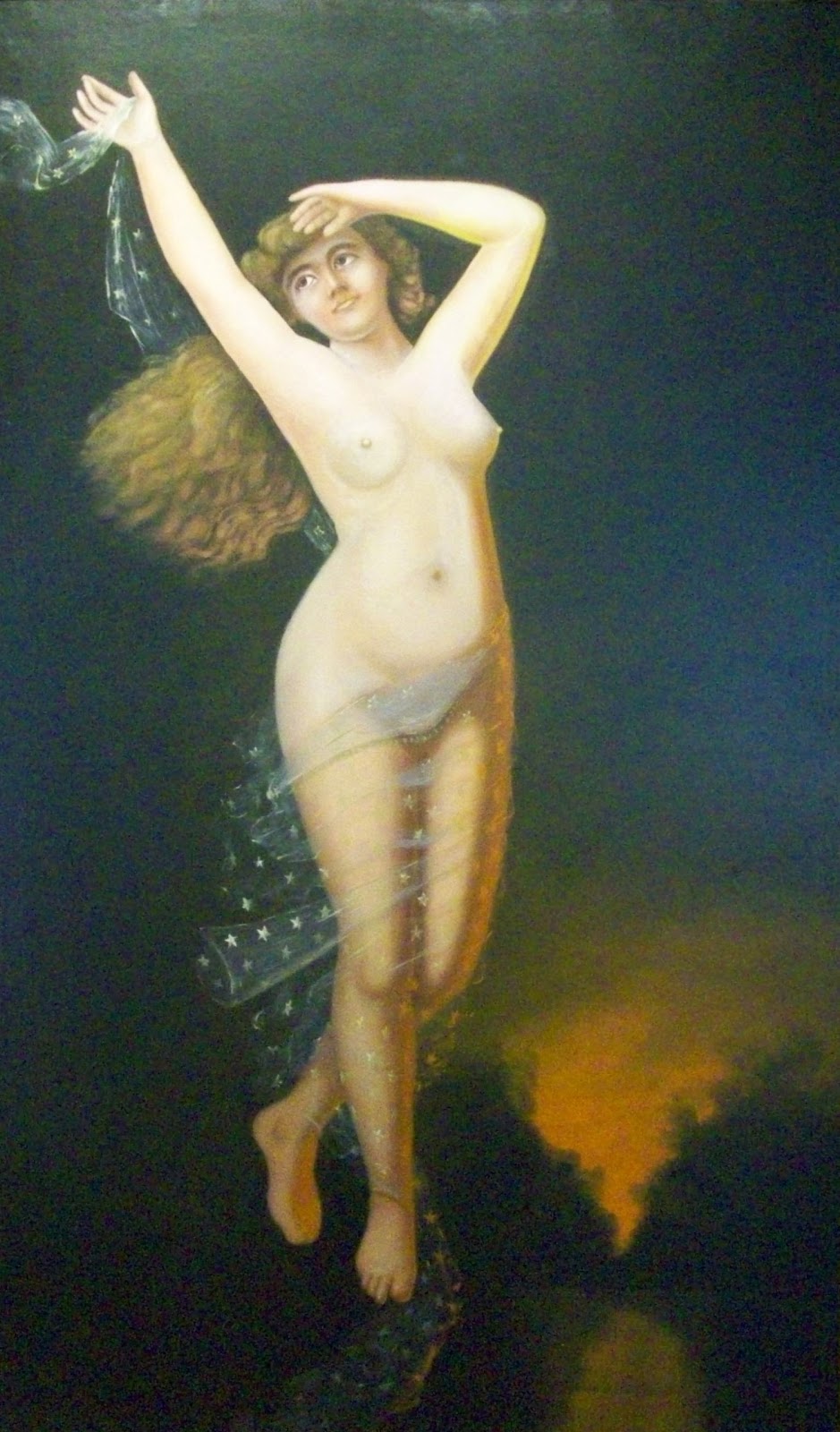
Sir Humphry Davy
The first practical sources of electric light were arc lamps, in which light is created by a sustained spark jumping between two carbon contact points. This technology is still in use today in the form of some welding torches. As one might imagine, they give off unpleasant bright, harsh light, making them unsuitable for many of the applications for which we use electric lights today. For this reason, the very first practical implementations of electric light were in lighthouses, where brightness is paramount. Experiments in electric lighthouses were conducted as early as 1839, and in 1862, the first permanent commercial electric light was installed in the Dungeness Lighthouse in Kent (Douglas 136). This installation was as much a novelty as a practical measure, and the financial specifics were followed closely in scientific and trade journals, along with much speculation about the eventual utility and cost effectiveness of electric light. It wasn’t until the early 1870s that electric lighting began to see broader commercial success. The invention of relatively small electric generators such as the Gramme Machine allowed localized energy production that alleviated the need for large amounts of copper wire. The arc lamps did not give off a pleasant or calming light, but they did give off a lot of it, and for this reason, once they became economically viable, electric lights were installed in factories and the like, where the potentially greater cost of electricity versus oil or gas was offset by fewer injuries, fewer mislaid tools and parts, and the other benefits of this harsh lighting.
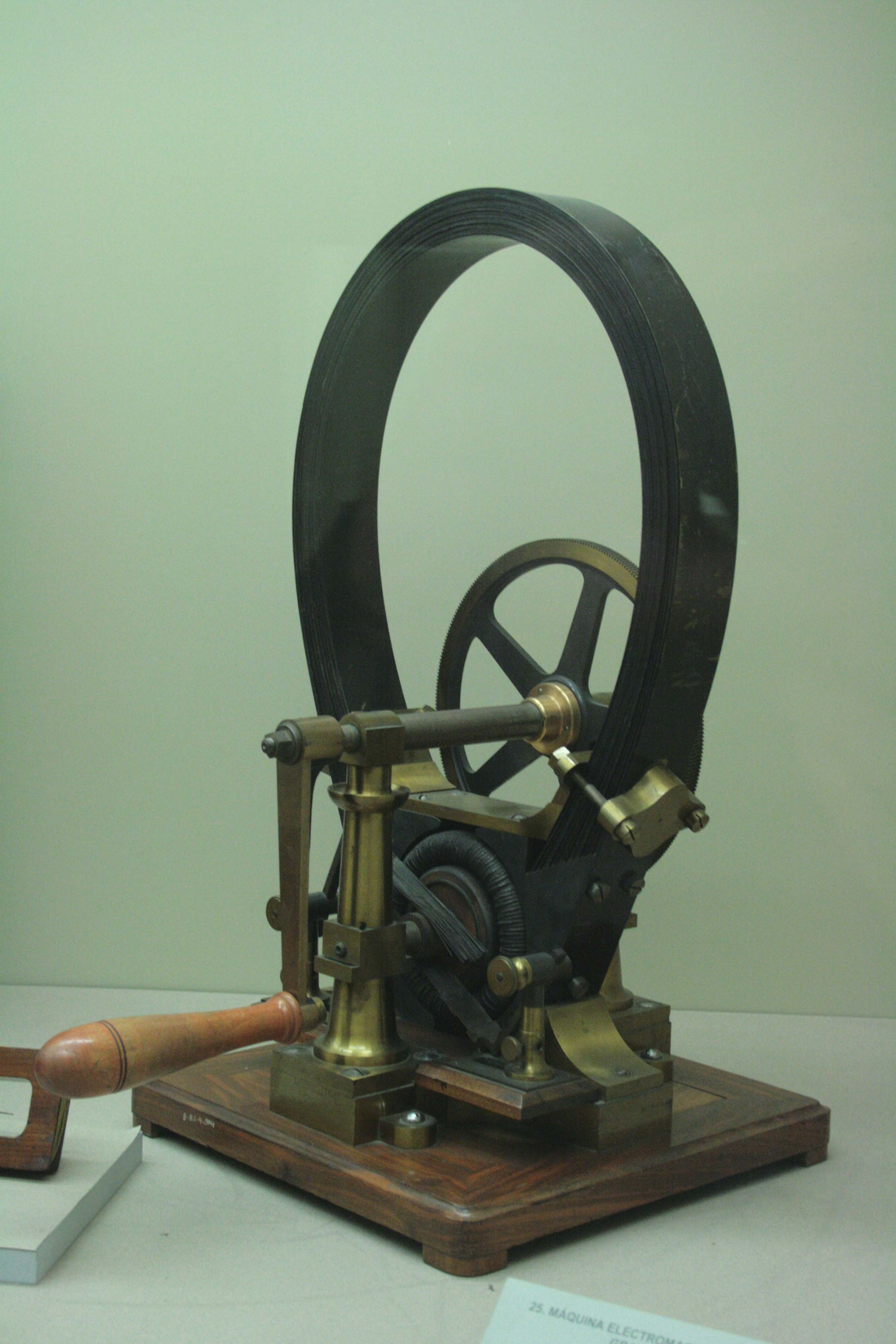
Gramme Machine
However, to treat the adoption of electric lighting as a purely financial decision, or even a scientific curiosity misrepresents the cultural impact they had on a society that had only ever experienced artificial light that was produced by flame. When outdoor arc lights were turned on in Wabash a witness described the reaction:
No shout or token of joy… disturbed the deep silence that suddenly settled on the vast crowd that had gathered from far and near to witness the consummation of a singular enterprise. The people, almost with bated breath, stood overwhelmed with awe as if they were near a supernatural presence. The strange, weird light, exceeded in power only by the sun, yet mild as moonlight, rendered the courthouse square as light as mid-day (Helm 240).
This scene is frozen in the popular imagination and reiterated in dozens of episodes of The X-Files with the addition of one detail, and the parallel is probably pretty accurate. There is a whiff of ozone in the air. The slack jawed bumpkin stares upward at an eerie, harsh light from on high, speechless and unable to move or react, shortly before he or his cows are abducted and experimented upon. Electric lighting was not just new; it was at the very fringes of science fiction; it was sexy, futuristic, awe-inspiring, and somewhat terrifying.
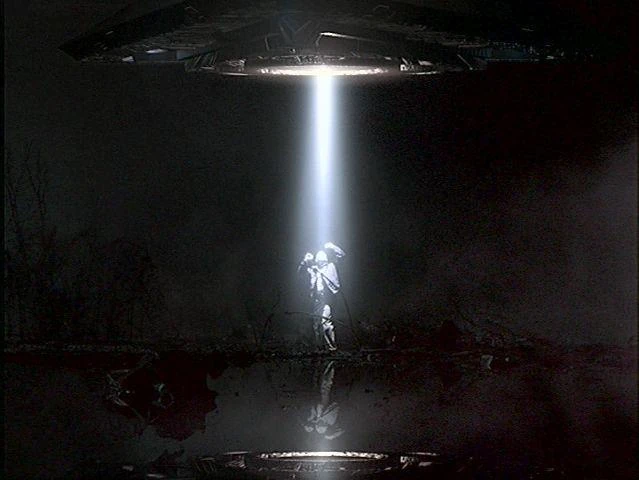
Scene from The X-Files episode "Tempus Fugit"
Soon railway stations, exhibition halls, and other glamorous venues were employing electric lights as much for what they signified as for their illumination ability. And for this reason there are dozens of cases of temporary installations and exhibits that, in conjunction with a multitude of qualifications, mean that there are several electrical ‘firsts’ in many different places. Wabash may have been the first town in the world to be ‘generally lighted’ by electricity, but Wabash was much smaller than Paris or London, which both had outdoor light exhibitions that preceded any in Indiana. Perhaps the reason Wabash can claim this record is that the town was small enough that four arc lights on a flagpole was enough to ‘generally light’ the whole town, or perhaps it is because the town of Wabash paid for the lights rather than a private individual or company, or because they meant to be installed permanently rather than for purposes of trial or exhibition, or all of the above. There are just too many different possible qualifiers to really declare a winner, and too many people arriving at the same inventions independently and nearly concurrently for these records to mean all that much. One thing we know for sure, though, is that by 1891 Telluride had lost the race for the first electric street lights by a mile.
Telluride’s record, the one that we stake out with our own little fingerprint of qualifications, is that Telluride (it was technically Ames) was the site of the first long distance transmission of alternating current for commercial purposes. By 1891 electric lights were already relatively widespread. In fact, Telluride already had a direct current power plant, and by some accounts there was direct current street lighting prior to 1891. Elsewhere, the famous Yablochkov Candle (a type of arc light) used alternating current to make sure that the two carbon contacts were consumed equally. Telluride’s distinction is that alternating current electricity was used as a means to transport kinetic energy that had been generated in one place and needed to be employed somewhere else. A flume was built between Trout Lake and Ames, a drop of a few thousand feet. Water flowed through the flume and powered a turbine called a Pelton wheel at the Ames power plant. The Pelton wheel was connected to an alternator that converted that mechanical energy into alternating current electricity. The electricity traveled through miles of wire that led to the Gold King Mine in Gold King Basin near Ophir. In Gold King Basin, the electricity powered a 100 horsepower alternating current induction motor that spun at nearly the same speed and torque as the alternator in Ames (the small drop in speed and torque was the result of resistance in the power lines). In short, the kinetic energy of the water wheel was turned into electrical energy, which was transmitted just under 3 miles to the Gold King Mine, where it was turned back into kinetic energy that powered a mill.

The Gold King Mine, the site of the world's first long distance transmission of alternating current for commercial purposes.
In order for this to happen, they needed transformers to ramp up the voltage of the AC power so that it could be efficiently transmitted, and then ramp it back down to a level that the motor on the other end could handle. They also needed an alternating current motor, which had recently been invented by one Nikola Tesla, and finally they needed an ambitious investor looking to prove a point, Mr. George Westinghouse, who was in the midst of a bitter AC vs DC war with Thomas Edison. Westinghouse was convinced to fund the experiment by an audacious Telluride banker named L.L. Nunn, who was losing a fortune buying coal to power his mill, and whose brother just happened to be an electrical engineer. It was a perfect combination to form the experiment that led to the first long distance transmission of alternating current for commercial purposes.
This was a culmination of a lot of very cutting edge technology, but its real value was as a proof of concept. Perhaps the single most important factor in the AC vs DC debate was that DC power cannot be easily transformed from high to low voltages. Low voltage electricity is great for powering machines, but it is very inefficient to transmit, incurring significant losses over fairly short distances, and requiring much more copper wire. The Ames Power Plant outside of Telluride implemented brand new technology, like the transformer and Nikola Tesla’s alternating current induction motor, to prove that AC power could be transformed to a high voltage, sent through wires, transformed back into low-voltage electricity and used to power an engine, and that this all could be accomplished without incurring prohibitive infrastructure costs.
Prior to the experiment at Ames, hydropower was on the verge of taking over the nation, but the mechanism by which it would operate was a matter of considerable debate. In 1886, there were plans to electrify the city of Buffalo, NY using the thunderous energy of Niagara Falls. The matters of using the water to turn a wheel, converting that rotation into electricity, and using electricity to create light were non-trivial engineering problems that had nevertheless been solved and implemented elsewhere. The real problem was that Niagara Falls, the source of that kinetic energy, was seventeen miles away from Buffalo, NY, the location of the light bulbs, and there was a lot of debate over how to transport that energy. Several proposals were considered, including using compressed air to transport the kinetic energy to a power plant in Buffalo. Ultimately, after years of debate,Westinghouse Electric's resumé at Ames was the proof they needed to win the bid to turn Niagara Falls into an alternating current power plant, transmitting the electricity over high voltage lines to the city of Buffalo.
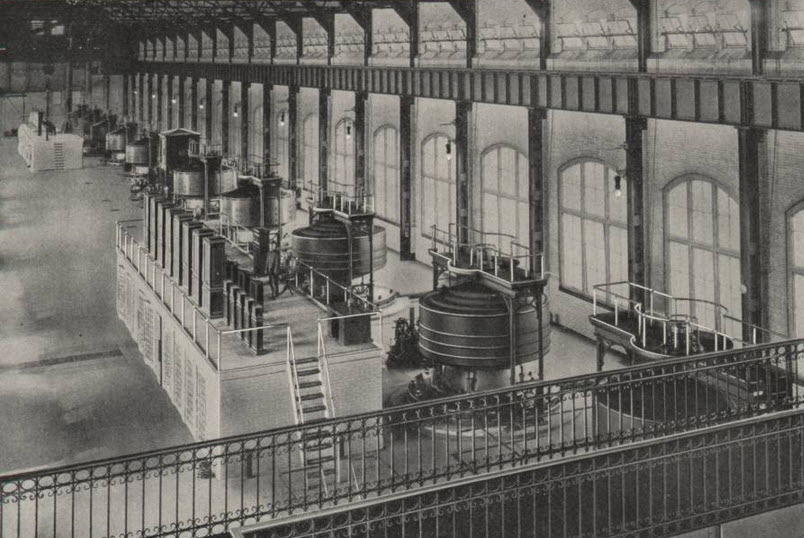
Generators at the Adams Power Plant at Niagara Falls

Massive transformers employed at the Adams Power Plant. Only two years after the Ames Generating Plant provided proof of concept, the difference in scale is staggering.
If pneumatic transmission seems like a comically impractical, steampunk approach compared to electricity, it is only because electric transmission has become ubiquitous; we hardly give a passing thought to the infrastructure that delivers it to our lights and washing machines. Long distance transmission of electric energy and the conversion between mechanical and electrical energy have been optimized and normalized to the point that they have become invisible, but the electrical grid is an enormously complicated machine. Consider that large scale energy storage is impractical and cost-prohibitive. If the power grid needs more power, electrical engineers at a power plant have to spin up a turbine to prevent a shortage, and if there is a lull, they have to scale back power production. Because electricity travels at the speed of light, this all happens in real time, and if electricity generation falls outside the tolerances of the grid, thousands of paying customers will be significantly inconvenienced, not to speak of potential equipment damage. There are entire power plants that sit idle, just waiting for a surge in demand, such as halftime during a soccer game when millions of people turn on electric kettles at the same time. Our power grid is an enormous, byzantine, underappreciated system that did not exist in the 1890s.
The implementation of electricity was one of the most fertile times for inventors in the modern era. The engineering challenge of controlling electricity, not to mention generating, transporting, and transforming it, had been at the bleeding edge of science and engineering for a hundred years, and the experiment at the Ames Power Plant is the culmination of this fecundity, and the proof of concept that launched electrical transmission from a promising curiosity to the prevalence it presently enjoys. In Ames, all of the components of modern commercial electricity were in place. In many ways, the primary difference in commercial electricity between 1891 and today is one of scale. The components were primitive by modern standards, and were quickly improved upon, but they completed all of the necessary functions in much the same way that they do today. Despite the underwhelming heft of the phrase “first long distance transmission of alternating current for commercial purposes,” Telluride’s claim to fame is more noteworthy than the more impressive sounding, but ultimately trivial “first electric street lights.”
Works
Cited
Douglas, J.N.. “The
Electric Light applied to Lighthouse Illumination.” The Telegraphic Journal and Electrical Review.
Vol. 7 (1879) 135-137. Web. 14 Oct. 2015
Tocco, Peter. "The Night They Turned the Lights On in Wabash." Indiana Magazine of History [Online], (1999): n. pag. Web. 13 Oct. 2015.
Tocco, Peter. "The Night They Turned the Lights On in Wabash." Indiana Magazine of History [Online], (1999): n. pag. Web. 13 Oct. 2015.
Helm, Thomas B. History of Wabash County Indiana: containing a history of the county; its townships, towns, military records portraits of early settlers and prominent men, personal reminiscences, etc. Chicago: J. Morris, Printer, 1884, 240.
Shoolbred, J.N.. Electric Lighting and Its Practical Application:
With Results from Existing Examples. London:
Hardwicke & Bogue, 1879. Print.
Slingo, Sir William, Arthur Brooker, and T.F. Wall. Electrical Engineering for Electric Light and Power Artisans and Students: (embracing Those Branches Prescribed in the Syllabus Issued by the City and Guilds Technical Institute). London: Longmans, Green, and Company, 1908. Print.


.jpg)